 By Gregory Schadt
 |
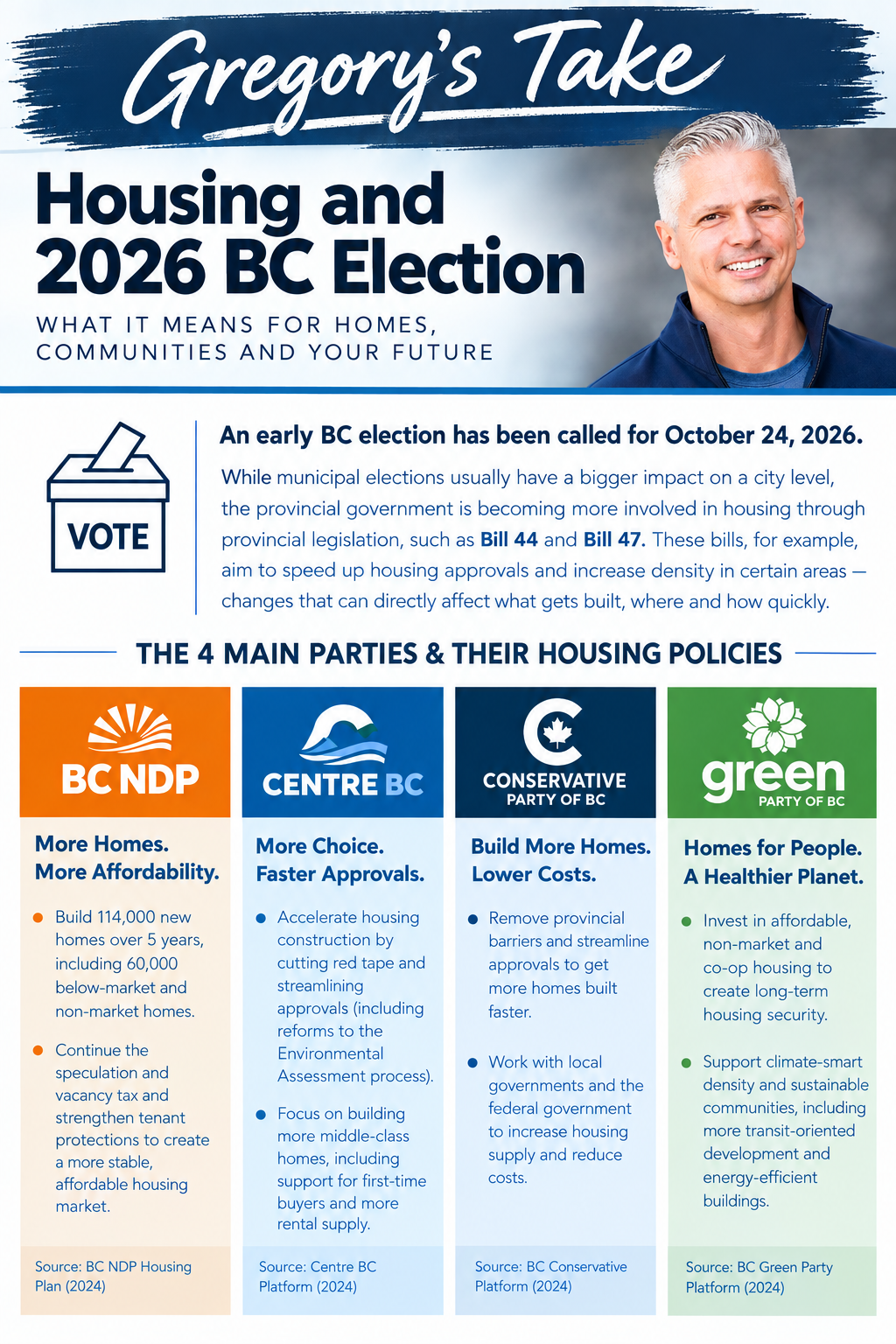
The Vibe CollectiveAs I join The Vibe Collective, one of my core goals is to keep our community informed on the forces driving Greater Victoria's real estate market. With an early provincial election scheduled for October 24, 2026, housing policy has moved directly to center stage. While municipal councils traditionally govern local zoning, the provincial government has taken an increasingly active role in shaping what gets built, where, and how fast. Key legislation like Bill 44 (Small-Scale Multi-Unit Housing) and Bill 47 (Transit-Oriented Areas) has fundamentally shifted the development baseline across British Columbia. Whether you are planning to buy, sell, or hold property over the coming years, understanding where each major party stands on housing is essential. The 4 Main Parties & Their Housing Platforms
🟧 BC NDP: More Homes. More Affordability.
- 5-Year Housing Target: Build 114,000 new homes, with 60,000 specified as below-market and non-market units.
- Market Stabilization: Maintain the speculation and vacancy tax while strengthening tenant protections to encourage long-term stability.
🟦 Centre BC: More Choice. Faster Approvals.
- Streamlined Approvals: Accelerate construction timelines by cutting administrative delays and reforming the Environmental Assessment process.
- Middle-Market Supply: Focus on first-time homebuyer incentives, expanding middle-class ownership opportunities, and increasing rental stock.
🟦 Conservative Party of BC: Build More Homes. Lower Costs.
- Barrier Reduction: Remove provincial regulatory hurdles to accelerate residential construction.
- Inter-Governmental Alignment: Partner with municipal and federal authorities to scale housing supply and drive down development costs.
🟩 Green Party of BC: Homes for People. A Healthier Planet.
- Non-Market Security: Invest in co-op and non-market housing initiatives aimed at long-term housing security.
- Sustainable Growth: Promote climate-smart density, energy-efficient building standards, and transit-oriented communities.
What This Means for Buyers and Sellers in Victoria
Provincial mandates like Bills 44 and 47 mean that transit corridors and traditional single-family lots are seeing direct changes in allowable density. How the elected government chooses to enforce, adapt, or expand these policies will impact property values, infill construction rates, and home availability across Vancouver Island. If you have questions about how changing housing legislation affects your lot, neighborhood, or upcoming real estate goals, feel free to reach out directly.
Contact Gregory Schadt